“Extraordinary”, “regrettable”, “unprecedented”. These are a few of the words used to describe the surge in right to buy applications local authorities have received since the government announced a significant reduction in discounts in last year’s autumn statement. Keith Cooper investigates the unintentional consequences of a policy designed to save social housing stock.
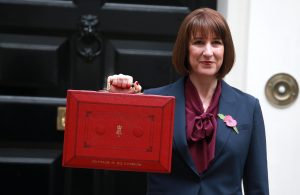
Chancellor Rachel Reeves pledged to “protect” council housing by massively slashing right to buy (RTB) discounts in her October autumn statement. Spurred on by housing lobby groups, she gave tenants just three weeks to secure the far-higher discounts set by previous governments.
Before the 21 November cut-off date, tenants could get between £136,000 and £102,400 off the price of their council home. The next day, discounts fell to between £16,000 and £38,000, depending on the region they lived in. “Thousands more council homes” would remain in the sector as a result of the drop in discounts, the Treasury pledged.
This tight timeline was intended to prevent tenants on the “cusp of homeownership” from being penalised, the Ministry for Housing, Communities and Local Government (MHCLG) told HQM. The Chartered Institute of Housing was one of a number of groups which pushed for this small window in a bid to “curtail” any surge in applications when the drop in discounts were made public. Both would have known from previous experience that applications and sales surge when a discount deadline is introduced, as they did in 2003 during the last Labour administration.
So, how has the chancellor’s pledge to protect council homes with the new drop in discounts panned out? Not very well, if a snapshot survey of councils for HQM is anything to go by.
In Birmingham, the number of RTB applications shot up from an average of between 150 and 200 a month to 5,117 in November 2024 ahead of the chancellor’s deadline.
‘Unprecedented’
Bristol City Council received an “unprecedented” 1,105 applications following the autumn budget announcement, compared with 238 for the whole of the previous year.
The London Borough of Hackney had 810 applications in November compared with 50 in the previous month.
All eight authorities that provided figures reported a multi-fold increase in applications for 2024/25, compared with the previous financial year.
Based on these figures, the three-week RTB discount deadline led to 31 times more applications in November 2024 than the previous month. And as RTB sales broadly track applications, this post-autumn statement spike could potentially result in a huge jump in sales too.
‘Extraordinary’
The Chartered Institute of Housing said the “extraordinary” jump in applications would lead to a “regrettable” loss of homes and hit council housing finances, which are already in a “parlous state”.
“There has been considerable variation across the country, but clearly some local authorities have seen extraordinary numbers of applications,” said Rachael Williamson, the institute’s interim director of policy, communication and external affairs.
The Local Government Association said the “significant increase” in applications would result in a “spike in the sale of desperately needed social homes”. “This will further exacerbate the homelessness challenges that councils are working hard to address,” a spokesperson added.
“Based on HQM’s figures, the three-week RTB discount deadline led to 31 times more applications in November 2024 than the previous month”
Most of the councils we spoke to said it was too early to tell how much of this sudden rush of applications would translate into sales. But several warned of “significant” losses. “If the RTB applications currently received are sold, there will be a significant amount of council stock gone,” a spokesperson for Birmingham Council said.
Sandwell Council said: “There are concerns that this surge will impact our social housing stock. However, until RTB sales progress it’s difficult to predict the level of impact this will have.”
The West Midlands authority received 1,342 of its 1,828 applications for 2024/25 in the window between the autumn statement and the November deadline. The total for the year represents a 270% increase from the 493 applications it received in the previous year. Of the 147 applications which have been sent formal offers, 17 have so far accepted.
‘Significant concerns’
Wolverhampton Council said it has “significant concerns regarding the loss of any social housing stock” and its impact on residents and its housing revenue account budget. It received 1,200 applications after the October budget announcement compared with between 30 and 60 a month previously. Most of the applications submitted during the surge are “in progress”, a spokesperson added.
Dudley Council said it anticipates 200 households completing the RTB as a result of the surge. This compares to the 97 it sold the previous year, according to official figures. The West Midlands authority received 621 RTB applications since October, most of them during the three weeks before the 21 November cut off.
“We received the same number of applications in that three-week period than we have had over the past two years,” Ian Bevan, its cabinet member for housing and communities told HQM. “With the exception of one or two applications, all have now been advised of a decision,” he added.
No other authority put a figure on its predicted losses from the November surge in applications.
“We received the same number of applications in that three-week period than we have had over the past two years”
Ian Bevan, cabinet member for housing and communities, Dudley Council
Manchester Council pointed to its figures for last year, which showed that of the 325 applications it received, 138 resulted in sales. This is equivalent to a 42% translation rate. The city received 594 applications following the October announcement and 171 since the deadline elapsed. “Although there was an increase in RTB applications in the very short term after the October 2024 budget, this has now vastly reduced,” said Gavin White, its executive member for housing and development.
The most recent official data shows that between 40% and 50% of applications translate into sales. But the MHCLG said it expects that a higher level of the applications made between 30 October to 21 November will be “speculative”. This will result in a “lower proportion” of applications made during that period to convert into sales, a spokesperson added. The department didn’t say how much it expects these “speculative applications” to flatten the November spike.
It’s unclear from government data whether cuts in RTB discounts lead to a rise in unsuccessful applications. The last time a Labour government announced a drop in discounts in January 2003 the number of applications jumped to 175,121 in that year from 102,347 the previous year. The proportion of applications translating into sales fell from 51% in 2001/02 to 36% in 2002/03 but then rose to 65% the following year when many of the sales may have completed.
The immediate impact on councils, of course, is the challenge of having to manage the huge rises in applications within set legal timeframes. Councils are supposed to notify tenants whether their application meets the requirements of RTB laws within four weeks. They must then send an official offer, known as a ‘section 125’ notice, within eight weeks. Tenants have 12 weeks to accept or decline this offer, but this can be extended.
No warning and extra staff
Councils told HQM they had received no warning from the government about its plan to axe discounts. Many had been forced to take on extra staff and divert resources from other services to meet their processing deadlines.
“The council wasn’t given advance notice of the changes to the maximum discount that could be granted,” a spokesperson for Southampton Council said. “The council responded by hiring an additional member of staff to process the applications that had been received in the period of time when the larger available discount was still active,” he added.
Bristol Council said it had recruited three additional RTB officers. “Other teams within the council that have a role in the RTB process, such as creating the plans and energy performance certificates, completing the property valuations required to calculate discount, and carrying out the conveyancing for the sales, have also seen an increase in their workload,” Richard Eddy, vice-chair of its homes and housing delivery committee said.
“The council wasn’t given advance notice of the changes to the maximum discount that could be granted. [We] responded by hiring an additional member of staff to process the applications”
Southampton Council
Birmingham Council said it had increased the capacity of its homeownership team to process its “spike” in applications. “Overtime was also offered to colleagues in the Home Ownership Team. Birmingham City Council’s fraud team carried out credit checks on all RTB applications to identify those that can be denied under the RTB legislation to reduce the processing numbers.” The city had 6,169 live RTB applications on its books in early April, when HQM approached it. Of these, 3,854 were yet to be processed.
Sandwell Council said it also advertised a temporary post to help staff with the administration of its spike in applications. “To manage the high volume of customers requesting updates, letters are being sent to all applicants informing them of delays in processing, in accordance with legislative timelines,” a spokesperson said.
Hackney Council said it had brought in temporary staff and prioritised other areas of work to help with its jump in RTB applications.
Welcome protection
Despite this unexpected administrative burden and the significant risk of a spike in RTB sales, councils have welcomed the extra protection that lower discounts offers to the stock they have left.
“Through RTB, Manchester has lost thousands of council and social rent homes to the private sector over the last 30 years without a coherent plan to replace them and meet growing demand for this type of housing,” says Manchester’s Cllr White. “We support the premise of the change made by the government and the reduction in the discount being made available, which in the longer term will mean fewer social homes are taken out of the market for those that need them the most.”
A spokesperson for Bristol said it had lost 1,672 council homes through RTB since 2012. This had reduced its rental income by £8.7m, a revenue stream which would have supported £175m in borrowing to build 500 homes. “Bristol City Council has vocalised concerns to government about the impact of RTB on our housing stock – particularly given the extent of demand for housing Bristol faces, with over 20,000 households on our waiting list and 1,600 in temporary accommodation.”
“We very much welcomed the change in government policy on RTB at the time,” Rachael Williamson added. “Whilst it has unfortunate consequences in the short term, in the long term it should reduce RTB to very modest levels and retain more homes for letting at social rents. If we’re to tackle the housing crisis we must increase the supply of social and affordable homes. These RTB reforms will help with this.”
The LGA described the RTB reforms announced in the autumn budget as “a step in the right direction. But we urge government to go further to ensure that the scheme is fit for purpose. Councils are keen to work with the government to deliver the social homes our communities need and help relieve the financial pressures that the current shortage is placing on councils.”
While the impact of the November surge in RTB applications remains to be seen, it seems likely to put a big dent in social housing supply at a time when truly affordable homes are desperately needed.











One Response
You describe this fiasco as an ‘unintended consequence’. Maybe it was. But surely it was crystal clear to the government and Ms Rayner in particular, that her handling of the situation would trigger the inevitable consequence of RTB sales exploding throughout the whole of England. She after all knows the turf of RTB. Also, this government claims to be data driven in its policy making claiming it pays close attention to the detailed social impact of their policies on savage cuts to a range of the poorest & most vulnerable among us. They must’ve known in advance of the inevitable consequence of their grossly inefficient handling of the RTB issue.